
India's exports may have touched an all-time high of $422 billion in 2021-22 but recession in key western markets and geo-political crisis due to the Russia-Ukraine war are expected to impact the growth of the country's outbound shipments in 2023. All the global trade promoting factors like political stability, movement of goods, adequate availability of containers and shipping lines, demand, stable currency and smooth banking systems are in disarray. Adding to the woes, COVID cases have again started rising in countries like China, Japan, South Korea and the US.

As macroeconomic numbers continue to disappoint, reaching pre-Covid level is unlikely in FY21.

Japan is not making any preparations to postpone the 2020 Olympics, the government's top spokesman said on Wednesday, stressing Tokyo's resolve to host the event as scheduled despite the global spread of coronavirus.

AirAsia plans to sell 12 planes this year, a move that will bring in around 500 million ringgit ($156 million) in net profit.

The Italian car giant surprised the recession-hit global auto industry with an announcement that it is bidding to take over the GM's struggling Opel brand to consolidate its global base. Though Fiat entered India almost six decades ago, it is facing rough competition from car manufacturers from Japan and South Korea. It tied up with Tata Motors for building a manufacturing plant near Pune to increase its supply capacity in 2007.

Having established its presence in the country, luxury carmaker Lexus is now looking to chart its next phase of growth in India as it looks to consolidate sales network and drive in new models, including fully electric cars in the country, according to a top company official. The company, which is the luxury car arm of Japanese auto major Toyota, initiated operations in India in 2017 and currently sells seven models in the country, including the locally-produced ES 300h sedan. Known for its self charging hybrid cars, the company is now gearing up to drive in battery electric vehicles, besides ramping up its existing product portfolio in the market.
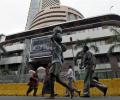
The market players are expected to react to the better than expected factory output data for the month of August, which revealed that the industrial production grew by 6.4%.

"No one has ever accused India of supporting what is going on in Ukraine. What India seems to be doing is trying to operate within the policy outlined by Nehru 65 years back," said a source.

In 2020, Indian users went up by 400 per cent, making it the fastest growing market in the world for Duolingo, with China coming in second.

Honda also unveiled the all-new CR-V and Civic sedan as part of its plan to launch six new products in the Indian market over the next three years.
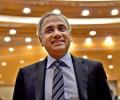
In 2017, when Infosys announced that Salil Parekh would be its next chief executive officer (CEO) and managing director (MD), very few in the industry or the analyst community doubted his ability to bring the company back to a healthy growth trajectory, improve morale within the company and, more importantly, win the promoters' trust and investor confidence. There were reasons for this confidence. He was not only the deputy CEO of the Paris-headquartered IT services major Capgemini, but also one of the only non-European faces on the executive board of the company.

The car was expected to have a price tag of Rs 10 lakh and launch was slated for this June.
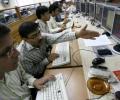
The 30-share Sensex closed down 115 points at 28,444 and the 50-share Nifty ended down 31 points at 8,524.

He is survived by two sons, Rajiv Bajaj and Sanjiv Bajaj, and a daughter Sunaina Kejriwal.

It expects the Indian market to grow to 10 million units annually by 2030 and it intends to control half the market then, like it does now.

If the Puja as a brand can be marketed more effectively outside Bengal, even overseas, it might do wonders for the economy, says Atanu Biswas.

The electric vehicle evolution in India's passenger vehicle market has remained frozen in time and may see limited adoption over the next decade, experts say.
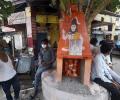
Calibrated reopening of the economy by states as the number of fresh COVID-19 cases subside increased mobility and aided in a fast-paced increase in an index of business resumption last week, a Japanese brokerage said on Monday. The Nomura India Business Resumption Index rebounded to 76 for the week ended June 13, up from the preceding week's 67.9, a note from the brokerage said. The pre-pandemic value of the index is set at 100.

What worked for Hyundai in India when so many other auto manufacturers have had to eat humble pie? Pavan Lall finds out.

It seems like after Tata Nano, Maruti Cervo and Bajaj-Renault-Nissan's ultra-low-cost car plans it's Toyota's turn to bring out a product for the entry level segment.

If it splits now, who takes what away and leaves what behind? asks Shekhar Gupta.

Maruti, which is majority owned by Suzuki Motors of Japan, pays massive tax, generates huge employment (its staff are almost entirely Indians) and also makes its investors extremely rich. JLR, on the other hand, though owned by Tata has its factories in England and China and in every way (sales, employment, technology) has nothing Indian about it.

The Sensex ended at at 27,676, lower by 210 points and the Nifty broke the psychological level of 8,400 to end at 83877 down 70 points.

Under MRA, Japan is to recognise Indian medical degrees and treat the country's doctors and other medical personnel on par with its own.

The leaders expressed their support, he told reporters around midnight in Tokyo after the G7 heads of state held an unprecedented meeting by video conference. At the G7 video conference, leaders committed to doing 'whatever is necessary' to battle the coronavirus pandemic and to work together more closely to protect public health, jobs and growth, and issued a statement promising to address the health and economic risks.

Prime Minister Shinzo Abe and Donald Trump talked by phone for about 50 minutes Friday morning and agreed to 'strengthen cooperation' on fighting the novel coronavirus, but did not discuss postponing the Olympics or holding them without spectators, Japanese officials said.

We need to clarify the rules for legal slaughterhouses and make sure that these can be enforced.

An alumnus of St Stephen's College, Delhi, his professional career began in the early 1990s. He completed a Master's degree in international affairs from Columbia University during 1996-98. And an MBA from Northeastern University, Boston.

Japanese Prime Minister Shinzo Abe's $12-billion loan at an incredibly low interest rate may have trumped China's aim to enter the enormous Indian Railways market, notes A K Bhattacharya.

This acquisition marks Lupin's foray into the Japanese branded market in-line with aspirations to build business globally.

India, the world's third-largest energy consumer and importer, on Wednesday warned of high oil prices hurting the nascent and fragile global economic recovery and floated an idea of long-term supply contracts that provide predictable and stable pricing. Speaking at the India Energy Forum by CERAWeek, Oil Minister Hardeep Singh Puri said there was a mismatch between demand for oil and the supplies producers such as OPEC+ were making and there was a case for raising the production. The world, he said, needs "predictable, stable and affordable" prices for it to recover back to pre-pandemic levels.

Organisers are still considering whether alcohol will be served in venues, Tokyo 2020 President Seiko Hashimoto said late on Monday.

The country's largest carmaker Maruti Suzuki India (MSI) on Monday reported a 11.8 per cent increase in wholesales to 164,469 units in February. The company had sold 147,110 units in February last year, Maruti Suzuki India (MSI) said in a statement. Domestic sales increased 11.8 per cent to 1,52,983 units last month, as against 1,36,849 units in February 2020, it added.

Rs 1,000 now buys $13.5 against $14 a year ago.

Concerns are swirling that Japan's dream of hosting the Tokyo 2020 Olympics could be a fatality of the spread of the new coronavirus, jolting organisers, sponsors, and media firms who have spent billions of dollars in the run-up to the event. Global insurers face a hefty bill if the coronavirus forces the cancellation of the Games, with estimates of the cost of insuring the showpiece running into billions of dollars.
.jpg)
The 30-share Sensex lost 22 points to close at 27,090 and the 50-share Nifty gained 7 points to end at 8,121.

The Chinese government is imposing severe restrictions on their tech companies - whether it is on data security, marketing practices or floating an IPO. Should this be music to the ears of Indian start-ups and home-grown private equity (PE) funds? Ask Indian start-ups and the answer is a resounding "yes".
Time was when you turned on your car's ignition, all that happened was that the mechanical system fired up your engine and made it run. Today, the moment you do so, your stereo system probably lights up, connects to the Bluetooth on your smartphone, and lets you make calls through an audio assistant or play music from your phone, which you can hear on the car's speakers. All these smart features in a car are powered by semiconductors, or chips, as they are commonly called.

IT majors along with metal names Sesa Goa and Hindalco buck trend.
